Becoming an Emergency Medical Technician (EMT) is a noble calling, a pathway for those driven by a profound desire to make a tangible difference in their communities during times of critical need. It's a role that demands quick thinking, compassion, and a steadfast commitment to providing immediate care to individuals facing emergencies. If you're considering this rewarding career, understanding the journey ahead is the first crucial step, and the MS Center for Advancement of Prehospital Medicine is dedicated to supporting this vital profession. This guide will walk you through the essential requirements, training processes, and first steps to launching your career in prehospital medicine.

Meeting the Prerequisites for Your EMT Journey
Before you can enroll in an EMT training program, there are several foundational requirements you'll need to meet. At a minimum, aspiring EMTs must typically be at least 18 years old, possess a high school diploma or General Education Development (GED) certificate, and hold a valid driver's license. Many programs also require candidates to pass a criminal background check and drug screening, reflecting the trusted and critical nature of the role. Additionally, prior to enrolling in an EMT program, you will often need to have current CPR (Cardiopulmonary Resuscitation) certification, usually at the Basic Life Support (BLS) for Healthcare Providers level. These prerequisites ensure that all candidates possess the foundational maturity and readiness for the rigorous training ahead.
Navigating EMT Training Programs
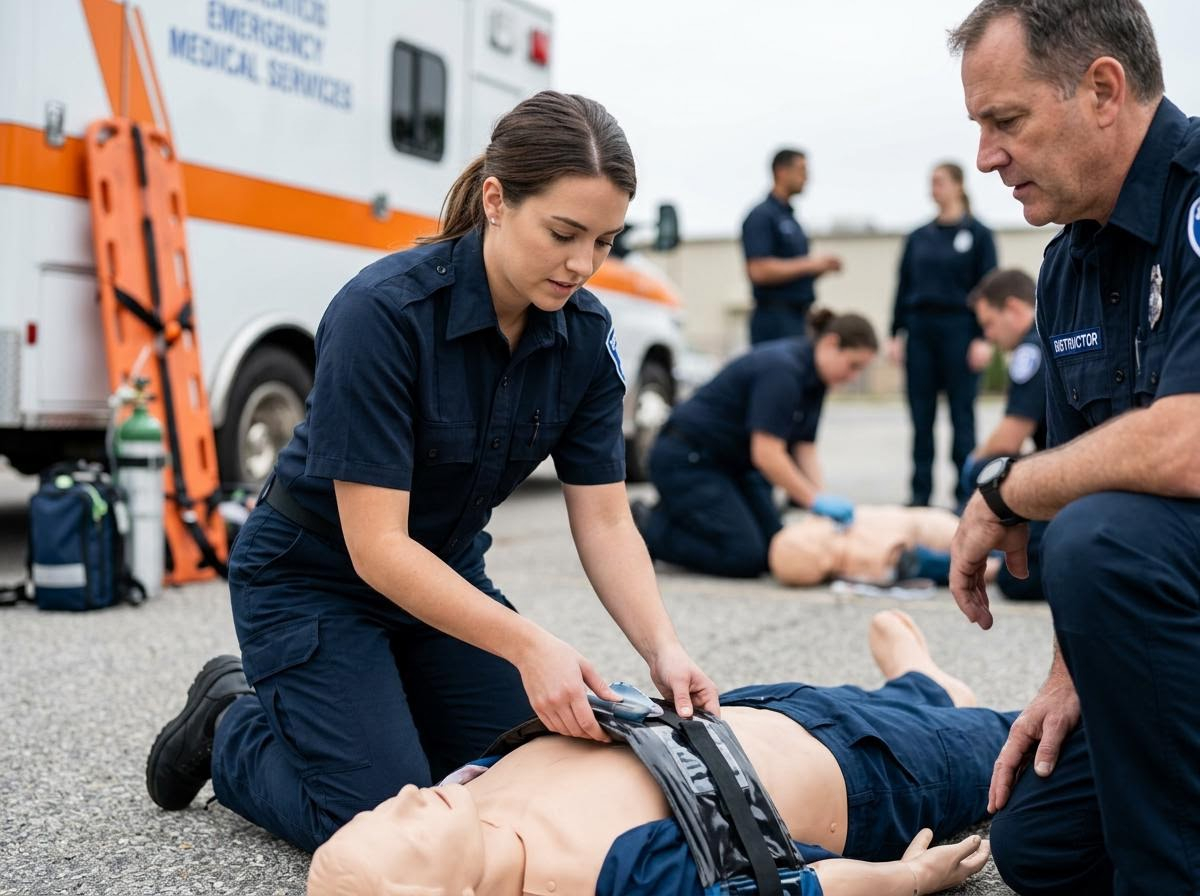
EMT training programs are rigorous, comprehensive, and designed to equip students with the foundational knowledge and hands-on skills necessary to handle a wide array of medical emergencies. The curriculum typically covers patient assessment, trauma care, medical emergencies (such as cardiac events or diabetic crises), pharmacology basics, special populations (pediatric and geriatric patients), and ambulance operations. These programs combine classroom instruction with practical skills training, often conducted in simulation labs where students practice scenarios like splinting, airway management, and bleeding control. A crucial component of training includes supervised clinical rotations in hospitals or ride-alongs with active EMS crews. These experiences are invaluable, providing real-world exposure and allowing students to apply classroom learning under the direct guidance of experienced professionals.

Certification and State Licensure
Upon successful completion of an accredited EMT training program, the next significant hurdle is passing the National Registry of Emergency Medical Technicians (NREMT) certification exam. This standardized assessment has both a cognitive (computer-based) and psychomotor (practical skills) component, ensuring candidates meet a national benchmark of competency in critical emergency care skills. Passing the NREMT is often a prerequisite for state licensure, but it's important to remember that each state has its own specific licensing requirements. These usually involve submitting your NREMT certification, completing a state application, undergoing additional background checks, and paying application fees. It is essential for aspiring EMTs to research and understand their state's particular regulations to ensure a smooth transition from certification to practice.
The Path Beyond Initial Certification
Achieving your EMT certification and state licensure is a significant accomplishment, but it's also just the beginning of a dynamic and fulfilling career. The field of prehospital medicine is continuously evolving, emphasizing the importance of ongoing education and professional development. Many EMTs choose to advance their careers by pursuing higher levels of certification, such as Advanced EMT (AEMT) or Paramedic, which involve more extensive training and a broader scope of practice. Beyond clinical advancement, opportunities exist in leadership, education, and specialized rescue operations. Continuous learning, networking with peers, and staying updated on the latest medical protocols are key to thriving in this profession and consistently providing the best possible care to those in need.
Embarking on the path to becoming an EMT is a significant commitment, demanding dedication, resilience, and a deep sense of responsibility to community well-being. From meeting initial requirements to mastering critical skills and achieving certification, each step prepares you for a career where every moment counts and every action can save a life. This vital profession forms the backbone of emergency medical services, providing immediate, life-saving care when it's needed most. To learn more about advancing your career in prehospital medicine or supporting exceptional patient care in Mississippi, explore the resources and opportunities available through the MS Center for Advancement of Prehospital Medicine.